New Zealand’s most unique animals
New Zealand’s wildlife has evolved in remarkable ways, shaped by millions of isolation from the rest of the world. From native forests and remote islands to its wild, beautiful coastline, the country offers unforgettable encounters with rare birds, marine life and species found nowhere else on Earth.

What makes New Zealand’s wildlife so unique?
New Zealand’s long isolation has resulted in some extraordinary wildlife, including flightless birds, ancient reptiles and marine species found nowhere else.
Some are famously elusive, so knowing where and how to look makes all the difference. Rather than simply adding a wildlife stop to your itinerary, we recommend building these experiences into the route and allowing enough time to explore with people who know the local habitats.

The most unique animals found in New Zealand
Meet New Zealand’s ancient tuatara
The ancient tuatara is no ordinary reptile. Often described as a living fossil, it belongs to a lineage dating back more than 220 million years, to the age of the dinosaurs. Remarkably, tuatara can live for more than 100 years.
Found only in New Zealand, this rare species has a distinctive “third eye” on the top of its head, although it is only visible in young tuatara.
Most wild populations live on protected offshore islands, including Stephens Island. Many of these places are remote or closed to visitors to protect the animals and their habitat, so seeing a tuatara independently in the wild isn’t straightforward.

Instead, we recommend visiting one of New Zealand’s conservation sanctuaries, where you can see tuatara responsibly and learn more about the work being done to protect them.
One place we recommend for learning more about tuatara and New Zealand’s native wildlife is a vast fenced ecosanctuary in the Waikato region. Protected by a pest-proof fence, its ancient forest is home to more than 730 native species.
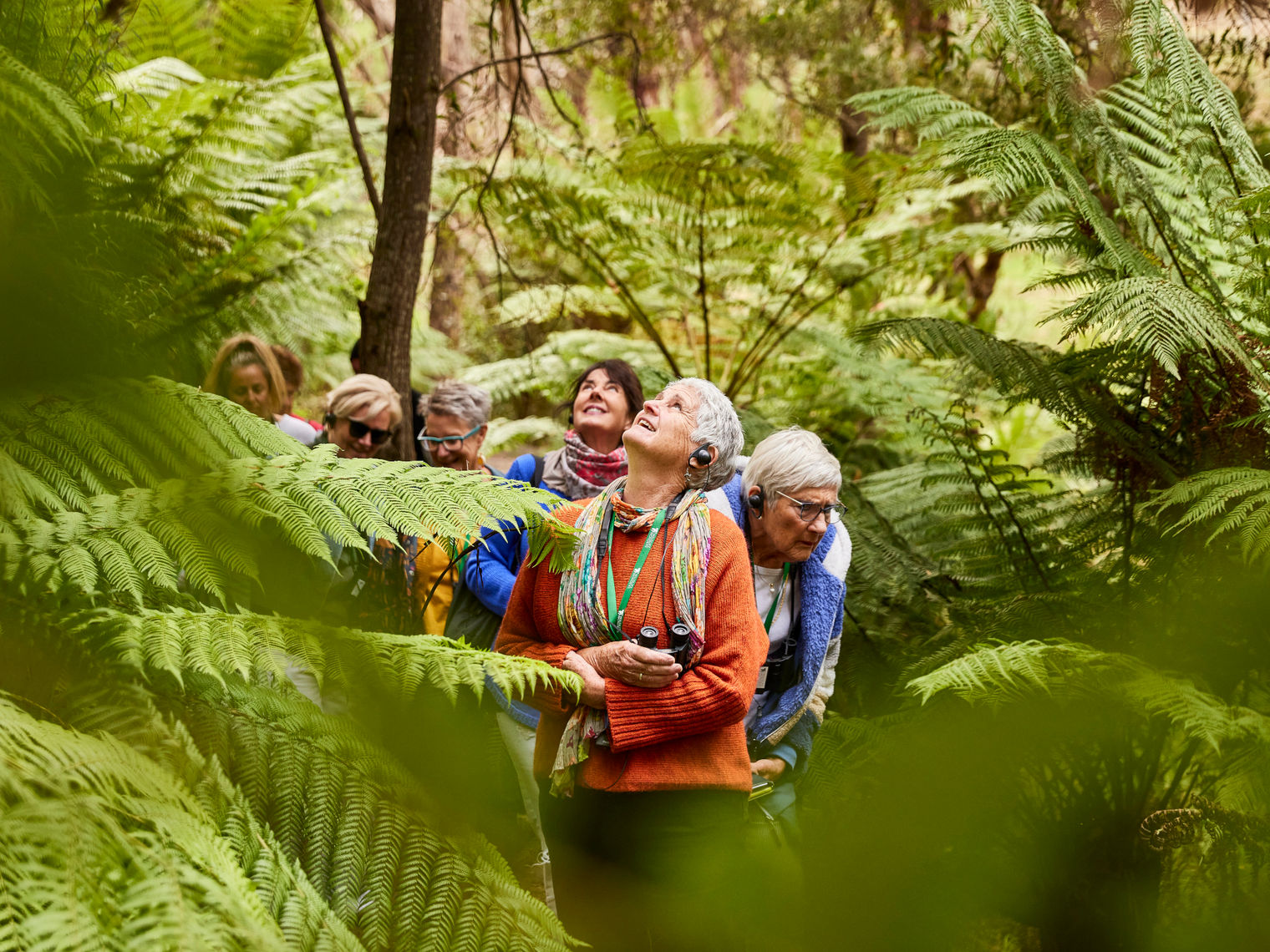
Created through a community-led conservation effort, the sanctuary continues to restore a once-threatened ecosystem. You can explore the forest on foot, listen for native wildlife, and learn more about the conservation work helping species such as the tuatara survive.

Hector’s dolphins: small dolphins, special encounters
Hector’s dolphins are among New Zealand’s most distinctive marine animals. They are the smallest dolphins in the world and are easily recognised by their grey backs and rounded black dorsal fins. They are generally found close to the coastline and often travel in small groups.
We recommend heading to Akaroa Harbour, near Christchurch, if seeing Hector’s dolphins is high on your list. Rather than simply visiting the harbour and hoping to spot one from shore, this is exactly the sort of wildlife experience we can build into a wider South Island journey.
Akaroa can then form part of a much broader tailor-made route rather than becoming an isolated wildlife excursion. We can shape the journey around the places and experiences that matter most to you, with the wildlife encounters fitting naturally along the way.

What makes New Zealand’s lesser short-tailed bat so unusual?
The lesser short-tailed bat is one of New Zealand’s few native land mammals and is found nowhere else in the world. Now endangered, it survives in only a handful of places, including Fiordland National Park.
Unlike most bats, it spends a surprising amount of time on the ground, foraging along the forest floor and climbing trees in search of food.
Seeing one in the wild is extremely rare, but simply knowing they are there adds another layer to a walk through New Zealand’s native forest and a greater appreciation for just how unusual the country’s wildlife really is.

Kiwis: shy, iconic and worth the search
The kiwi is New Zealand’s most famous bird and a national icon. Small, flightless and nocturnal, it is found only in New Zealand and is much harder to see in the wild than its celebrity status might suggest.
Kiwis are shy and usually remain well hidden during the day. Stewart Island and Kapiti Island are among the better-known places to look for them in their natural habitat.
This is one wildlife experience where we strongly recommend going with someone who knows what they’re looking and listening for. Local guides understand the birds’ habitats and behaviour, and they know how to search without unnecessarily disturbing them.

For a better chance of spotting kiwi in the wild, we can arrange an evening walk through a protected sanctuary with a local guide. Setting out at dusk, you’ll use red torchlight to search quietly for the birds while listening for their distinctive calls.
Your guide will help you tell the difference between male and female calls and share more about kiwi behaviour and the other native birdlife found in the sanctuary. It’s a far more rewarding way to look for kiwi than simply hoping to come across one by chance.
We can also build a guided kiwi walk into a longer stay, rather than treating it as a one-night detour. That gives you time to explore the surrounding area properly before heading out after dark in search of kiwi.

Look out for Yellow-eyed penguins (Hoiho)
The yellow-eyed penguin, known in Māori as hoiho, is one of New Zealand’s most distinctive native birds.
Like most penguins, it has a white belly and dark back, but its yellow eyes and pale yellow feathers around the head make it instantly recognisable. Its Māori name, hoiho, is often translated as “noise shouter”, referring to its distinctive call.
Hoiho are found mainly around the south-east of the South Island and on some offshore islands.
We’d recommend making the wildlife experience part of the route rather than simply choosing a beach where they are sometimes seen. A knowledgeable local guide can explain where the birds feed, nest and come ashore while helping you observe them safely.

Kea: clever, curious and full of character
Besides the kiwi, the kea is one of New Zealand’s most distinctive birds. It is the world’s only alpine parrot and is famous for its intelligence, curiosity and slightly mischievous character.
You’ll find kea on the South Island, particularly in forested and mountainous areas. Aoraki/Mount Cook, Arthur’s Pass and Fiordland are all places where you may encounter them.
Clever and adaptable, kea have learned to survive in a harsh alpine environment and eat everything from berries and insects to whatever tempting morsels travellers leave within reach.

For us, spotting a kea is best treated as part of the wider experience of travelling through the Southern Alps. Many of the handpicked places we recommend are surrounded by native landscapes, so wildlife can become part of your stay too.
Spend a little longer exploring the area and talking to local hosts and guides, and you give yourself more chances for those unexpected encounters.

How can you experience New Zealand’s wildlife responsibly?
Seeing wildlife in its natural habitat is always more rewarding when the animals remain in control of the encounter.
That’s why we favour knowledgeable local guides and small-scale experiences. They understand the local environment, know how to look for wildlife without disturbing it and can explain far more than you would discover by simply arriving at a known viewing spot.
Some of the most memorable encounters are also unpredictable. A kiwi might remain hidden, a dolphin can choose to swim elsewhere, and a kea certainly doesn’t work to anyone’s timetable.
That unpredictability is part of experiencing wildlife properly.
How can you include wildlife experiences in a tailor-made New Zealand trip?
You don’t need to plan an entire holiday around wildlife to have some exceptional encounters.
Tell us which animals you’d particularly like to see, and we can shape the route around the best opportunities, whether that means heading out onto Akaroa Harbour in search of Hector’s dolphins, joining a local guide after dark to look for kiwi or spending more time exploring New Zealand’s alpine landscapes.
We can then build those experiences into a wider tailor-made journey, alongside the places you want to visit, the walks you want to do and the small-scale stays that make sense for your route.

Frequently asked questions
Stewart Island and Kapiti Island are among the best places to see kiwi in a natural setting. Kiwis are nocturnal, shy and well camouflaged; joining a tour with an experienced local guide gives you the best chance of seeing one of these iconic national symbols.
New Zealand's wildlife can be seen throughout the year, but spring (September - November) and autumn (March - May) offer pleasant temperatures, fewer crowds and easier conditions for coastal and alpine exploring.
Several New Zealand animals are extremely rare, but Hector’s dolphin, the yellow-eyed penguin and the lesser short-tailed bat are among the most elusive. Joining a tour with a local, expert guide is the best way to view these rare animals safely and responsibly.