Western Australia
Western Australia is vast, wild and wonderfully varied. Think endless beaches, island-dotted coastlines, ancient national parks and the world’s largest fringing reef, all wrapped into one unforgettable adventure.

Where should you visit in Western Australia?
Explore Perth and its surroundings
Be welcomed by friendly locals to Perth, Australia’s sunniest capital. Discover a place where the Swan River meets the coast, combining beautiful beaches, natural attractions and relaxed urban experiences.
Take a wander through Kings Park, a 990-acre park overlooking the Swan River. Here, you will find open grassy spaces, barbecue areas, sweeping views and excellent playgrounds.

Delicious local produce and great views
Enjoy a cup of coffee at a café and savour local produce on the Swan Valley Food and Wine Trail. Visit Reabold Hill for a different kind of lookout over the region of Perth.
The raised boardwalk is surrounded by native bushland and provides views over Perth City, the Indian Ocean, Rottnest Island, and Kings Park.

Are you a history buff?
The WA Shipwrecks Museum is a maritime archaeology museum where you can learn more about the ships wrecked along the Western Australian coastline, including the Dutch ship Batavia. For something more active, follow Syd’s Rapids and Aboriginal Heritage Trail, a 4-mile route through Walyunga National Park.
Take in the rapids before continuing along the Aboriginal Heritage Trail, which offers insight into the Noongar connection to Walyunga National Park.

For the sports enthusiasts
Visit the Perth Stadium (also called Optus Stadium) in Burswood and cheer on the Fremantle Dockers or the West Coast Eagles. Enjoy a cricket match at WACA or Perth Stadium or play a game of golf with a view overlooking the Indian Ocean at Seaview Golf Club.

Fremantle
Just 20 minutes south of Perth, you will find the little harbour town of Fremantle. A hip and colourful place with plenty of things to do and see! Here, you will find a prison built in 1850, which is one of the most infamous prisons in the British Empire.
Be sure to visit the Fremantle Markets for some local delights or enjoy a cold beer on an outdoor terrace!

Rottnest Island
Rottnest Island is a protected nature reserve located just 12 miles off the coast of Perth and is a must-visit while exploring this part of Western Australia.
This popular recreational island is known for its tranquil setting and resident quokkas, small marsupials found across the island. Stay overnight to enjoy a slower pace, and be sure to explore Pinky Beach, Little Salmon Bay and The Basin.

The Golden Outback
Immerse yourself in the wonders of Australia’s Golden Outback. This region makes up 54% of Western Australia and got its name because gold was found here. In the north, you will discover the rugged red earth landscape of Mount Augustus and the Kennedy Ranges.

Endless possibilities
Discover the snow-white beaches of Esperance, or head inland to Kalgoorlie, a modern mining hub where you can uncover the history and heritage of Western Australia’s gold rush era.
Further west, the Wheatbelt reveals rolling farmland, quirky rural townships, granite outcrops and, of course, the famous Wave Rock.
Uncover the local treasures
Visit outback pubs, go on a road trip or experience a farm stay! This place has the world’s most extensive collection of wildflowers too. Follow a wildflower trail in the spring and view the spectacular sight of colours.

Wave Rock
Uncover the mystery of one of Australia’s biggest waves, which is not found in the ocean. Wave Rock is a well-known natural phenomenon located near the Wheatbelt town of Hyden, around 211 miles from Perth.
This multicoloured granite rock was formed more than 2.7 billion years ago and is now one of Western Australia’s most distinctive natural landmarks.

An impressive 15 metres high and 110 metres wide, a spectacle of nature!
The cliff is characterised by its shape, which remarkably resembles a massive wave about to crash into the bush. Admire the wave from various vantage points, including from the top, where you will be rewarded with a fantastic view over the outback.
Marvel at Mulka's Cave and the Humps
Nearby, you can also visit a collection of ancient rock paintings that cover the walls of Mulka’s Cave and tell the story of a local Aboriginal legend.
You can also explore Lake Magic and follow the circuit walk, located less than a mile north of Wave Rock.

Esperance
Discover one of the Earth’s natural treasures in Esperance, a dream destination for beach and nature lovers. Located on the Southern Ocean, around 447 miles south-east of Perth, this beautiful coastal region is known for its white-sand beaches, turquoise waters and untouched islands.
Discover one of Australia's whitest sand beaches
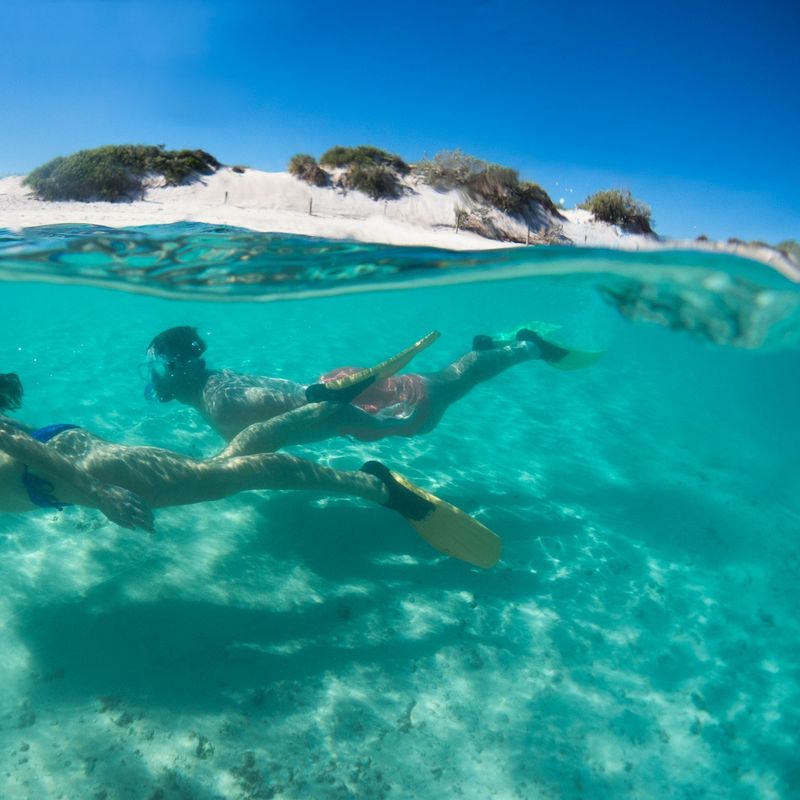
Visit Lucky Bay and admire squeaky-clean sand, arguably one of Australia's whitest sandy beaches. There are over 100 rocky islands scattered throughout the Esperance coast, nestled in the navy water. A short drive from Esperance is Blue Haven Beach and Twilight Cove, two idyllic spots for undisturbed swimming and snorkelling.

From world-class surf beaches to pink lakes
If you're looking for the waves, travel to West Beach, Fourth Beach or Observatory. Visit a bright pink lake, Lake Hillier, on the edge of Middle Island. Or go on a 4WD adventure and explore all that this spectacular place has to offer!

The Nullarbor Plain
The Nullarbor Plain covers an impressive area of around 77,000 square miles, stretching from Norseman in Western Australia to Ceduna in South Australia. Renowned as one of the world’s most spectacular drives, it reveals a vast, flat landscape of bluebush, mulga scrub and, after rainfall, colourful wildflowers.
The ultimate road trip
Did you know? Australia is home to the longest stretch of straight road in the world, measuring around 92 miles. The Eyre Highway in Western Australia is approximately 1,041 miles long and links Western Australia with South Australia.
It takes around two days to cross, with plenty of unusual and memorable sights to discover along the way, including the Great Australian Bight and the remote landscapes of the Great Victoria Desert.

Kalgoorlie
Get off the grid in Kalgoorlie, located around 370 miles east of Perth, off the Great Eastern Highway. Set within the Goldfields–Esperance region, this outback gem is known as Australia’s largest outback city.
The name Kalgoorlie is derived from the Aboriginal Wangai word Karlkurla, meaning “place of the silky pears”. Spend your days visiting the Museum of the Goldfields, Hammond Park, or following the Golden Quest Discovery Trail.

Southwest Western Australia
Be inspired by nature’s open-air art gallery - A stunning region located in the southwest corner of Western Australia. Admire rolling vineyards, pristine surf beaches, tall-timber birdwatching forests, and spectacular coastal scenery.
A region with all the things you love
Enjoy a glass of world-renowned wine together with local truffles or freshly caught crayfish. Visit Karri Forests and go hiking, birdwatching or take a scenic drive. Spot killer whales in Bremer Bay (January to April) and maybe even large orcas.

Explore endless and astounding nature
If you’re lucky, you may also see whales at Point Ann in Fitzgerald National Park. Go swimming in one of Mother Nature’s most remarkable swimming holes, Greens Pool. An adventure playground with endless natural beauty to be discovered and hidden gems to be found.

Stirling Range National Park
Be captivated by Stirling Range National Park, a natural oasis, ancient landform and biodiversity hotspot. Located in the Great Southern region of Western Australia, around 209 miles south-east of Perth, the park is known for its dramatic mountain ranges and remarkable natural beauty.
The ranges rise to around 3,280 feet above sea level, creating one of Western Australia’s most striking landscapes.
Be mesmerised by the tallest peak in the region, Bluff Knoll
The only place in Western Australia to ever see snow! Rich in Aboriginal heritage, the Indigenous name for the range is Koi Kyenunu-ruff, meaning 'mist rolling around the mountains'.

Renowned for colourful blooming wildflowers in the spring
Boasting over 12,000 different species of wildflowers, some of which are found nowhere else. A bushwalker's haven with an abundance of nature and wildlife to discover, it has one of the richest floras in the world. Spot parrots, emus, kangaroos, and wallabies.

Albany
Unearth the deep history of Albany, a port city on Western Australia’s rugged south coast, around 260 miles southwest of Perth. This Australian gem has a rich and layered past, with stories of Aboriginal heritage, convicts and settlers, whaling and sailors.
Albany is also the place where Europeans first set foot in Western Australia.
Do you have a passion for history?
Visit the Albany Whaling Museum to learn about the town’s whaling history, or head to the National Anzac Centre for insight into Australia’s wartime past. Albany holds strong significance in World War I history, as it was the departure point for many Australian and New Zealand soldiers and an important part of the ANZAC story.
For the nature lovers
See massive granite outcrops at Torndirrup National Park and The Gap, or spend time on some of the best beaches in this part of Western Australia.
For a bigger adventure, take on part of the Bibbulmun Track, one of the world’s great long-distance walking trails, stretching for around 621 miles.

Fitzgerald River National Park
Fitzgerald River National Park is one of Australia’s largest and most botanically significant national parks. Characterised by undulating plains, rugged peaks, headlands, bays and coves, it is a remarkable place to experience Western Australia’s natural diversity. The park is home to many unique plant species, some of which are found nowhere else.
Here, you can discover nearly 20% of Western Australia’s flora species
Fitzgerald River National Park is divided into two areas, as the core of the park is closed to all traffic to help protect its pristine natural environment. Access roads from the north, including Quiss Road and Hamersley Drive, are suitable for regular cars. The southern section of Hamersley Drive winds along the coast, passing Four Mile Beach, Barrens Lookout and Cave Point.
Go whale watching
The road ends at Point Ann, where you can watch migrating whales. They migrate in winter with their newborn calves. To the east, you can climb East Mount Barren, one of the three peaks of the Barren Range, or hike inland trails at Sepulcralis Hill and No Tree Hill.

Margaret River
Tucked away in Australia’s southwest corner is one of Australia’s premium wine regions. Margaret River, where rolling vineyards meet the wild ocean and the spectacular forest. Located three hours' drive south of Perth, in Western Australia.
A diverse region with so much to offer
Discover world-class beaches, ancient caves, award-winning wineries, and tall-timber trees. A gourmet escape with over 120 wineries to savour, boutique breweries, fine restaurants, local cheese, and divine chocolate. Visit art galleries, go surfing, mountain biking, or whale watching (seasonal).
Are you a wine and food lover?
Producing 15% of Australia’s wine, including the world-renowned Cabernet Sauvignon, Chardonnay, and Sauvignon Blanc. With an abundance of sunshine, it is one of the most geographically isolated wine regions in the world. If you are lucky, there may be a local food festival happening too!

Busselton
Around 137 miles south-west of Perth, on Western Australia’s coast, is Busselton. Together with nearby Margaret River and Dunsborough, the region is renowned for its whale-watching opportunities.
Between May and December, tens of thousands of whales pass this vibrant part of the coast during their annual migration.
A must-do while you are exploring this part of the world
Operated by a non-profit community organisation, the heritage-listed Busselton Jetty stretches for around 1.1 miles. It is the longest timber-piled jetty in the Southern Hemisphere.
Construction of the jetty began in 1864, and today it is one of the region’s biggest attractions.
Enjoy Busselton like a local
Be sure to visit Geographe Bay, Tuart National Forest, Busselton Foreshore and the Busselton Museum. The Underwater Observatory and Marine Conservation area can be reached by train along Busselton Jetty. Descend 26 feet below the ocean’s surface to discover more than 300 marine species in their natural habitat.

Dunsborough
Explore Dunsborough, a coastal town in Western Australia’s south-west, located around 158 miles south of Perth on the shores of Geographe Bay. An award-winning tourist destination, it is also a popular escape for locals.
Spend your days beach hopping, visiting Cape Naturaliste Lighthouse or sampling local wines at nearby wineries.

The Northwest of Australia
Are you ready to discover one of the last true wilderness areas on earth? The North West is bursting with billions of years of history, Indigenous culture, and endless natural wonders.
From the pearl capital of Broome, the gateway to the Kimberley, to Gibb River Road, the Milky Way, and beyond. An outdoor playground that is ready to be explored, hop in a 4WD and let's go!

Broome
Broome, where red dirt meets the ocean, is a gateway to the wild Kimberley region. Located around 1,045 miles north of Perth, this coastal town has a tropical feel, a laid-back atmosphere and a colourful sense of history.
Originally founded around the pearling industry, Broome is now a vibrant multicultural destination with a character all of its own.
From fresh pearls to camel rides along the beach
Try on the perfect white orbs of cultured Broome pearls, or hold one freshly plucked from the sea. Ride a camel along Cable Beach at sunset, with 14 miles of gleaming white sand stretching beside the Indian Ocean.
The perfect blend of nature, food, and adventure
Spot rare snubfin dolphins on an ocean cruise, or explore the creeks and mangroves of Roebuck Bay. Here, you can go boating, swimming, fishing or birdwatching. Enjoy the local food scene outdoors, perhaps sampling mango craft beer and smoked barramundi.

The Kimberley
Spread across Australia's entire north-western corner is the Kimberley. One of the world's last wilderness frontiers is located in Western Australia. This region has an abundance of wildlife and natural beauty to be discovered. A place bursting with fresh swimming holes, outback stations, wide rivers, ancient rock formations, and gorges that have eroded over millions of years.
Waterfalls, bush tucker, and unique 2000-year-old trees
Admire mystical waterfalls such as Mitchell Falls. Try some local bush tucker or stop by the iconic Bungle Bungles. Get better acquainted with the Aussie Outback at El Questro Wilderness Park. Stop by Windjana Gorge National Park, Tunnel Creek National Park, or King Leopold Ranges. Here, you can also find Boabs, a tree species with a gigantic, thick trunk that can live for more than 2000 years. A unique part of this region.

Cape Leveque
Go on a 4WD adventure down a red dirt road and discover an Aussie gem, Cape Leveque. One of the world’s most remote places - where golden red-rock cliffs meet the white sand and turquoise ocean. Located at the tip of the Dampier Peninsula, north of Broome, a little treasure in the Kimberly.
Learn about the oldest living culture in the world
Immerse yourself in the quintessential feel and colours of the Cape Leveque road. Rich in Indigenous culture, dating back over 7,000 years. You can visit local Aboriginal communities along the way. Learn more about their traditional way of life and custodians. Find out how they sourced bush tucker too!
An abundance of water activities and freshly caught seafood
Go snorkelling and admire colourful fish or try your luck at some mud crabbing. This region is renowned for world-class fishing - mackerel, tuna, cobia and sailfish are all found in these waters.

Bungle Bungles
Unlock the treasures of the World Heritage-listed Bungle Bungles, a remarkable natural phenomenon located within Purnululu National Park in the Kimberley region of Western Australia.
Covering around 1,930 square miles, the park is known for its striking beehive-shaped, striped domes, which rise up to 984 feet from the grassy plains.
One of the world’s most remarkable and oldest geological landmarks
Estimated to be over 350 million years old, discover this fascinating place on foot, via a scenic flight or have a 4WD adventure. Rich in Indigenous culture, The Djaru and Gija Aboriginal people are the custodians of this region with a rooted past.
Marvel at ancient art and unique wildlife
Here, you can find ancient rock paintings, over 130 different species of birds, unique native animals such as the Nail-tail wallaby, and short-eared rock wallabies. Admire narrow chasms, hidden gorges, waterholes, and endless wilderness. A real Aussie gem!

Gibb River Road
Experience a real outback expedition on one of Australia’s most unique 4WD routes - Gibb River Road. Get ‘off the grid’ for an Aussie adventure through the vast, untouched landscapes of the Kimberly in Western Australia. A notorious trek from Derby to Kununurra, discovering the secluded wilderness, a galore of natural gorges, and cattle farms the size of a city.
A nature wonderland
The route takes its name from the Gibb River, which is almost 404 miles long. The region is rich in Indigenous culture, with traditions practised here for many thousands of years.
Highlights along the way include Windjana Gorge, Tunnel Creek, Lennard Gorge, Bell Gorge, Galvans Gorge, Manning Gorge, Drysdale River Station, Home Valley Station and El Questro Wilderness Park.

Mitchell Plateau
Uncover the secrets of Mitchell Plateau, one of the most spectacular parts of the Kimberly. A pure gem, rich with Aussie nature and an abundance of waterfalls. Mitchell Falls is a waterfall with no less than four plateaus, situated in the far north of the Kimberley.
Go waterfall hopping
The waterfall stands 262 feet high, making it the third-highest waterfall in Western Australia. The cascading water adds to the rugged character of the Australian outback and completes the dramatic landscape of the Mitchell Plateau. You can reach the waterfall by helicopter or, during the dry season, by a six-hour walk.
Discover the jewels of the Mitchell River
Visit Little Merton's Falls, Big Mertens Falls, and Aboriginal art near the King Edward River. During this trip, it is also possible to enjoy the Mitchell River, a river that makes its way through the sandstone of the Mitchell Plateau.

Kununurra
This lively city is surrounded by large rivers, gorges, and spectacular waterfalls. A large amount of fresh water can be found in this area, held by the Kununurra Diversion Dam and the Ord River Dam. Both are part of an irrigation plan, which ensures that agriculture is possible in this area all year round.
Kununurra is the gateway to the east side of the Kimberley
Kununurra owes its existence mainly to the construction of this dam. It was initially built as a service centre for the government. The dam also provides the area with the third-largest artificial lake in Western Australia. The vast Lake Argyle lies close to Kununnura in the middle of the rolling landscape.

Fitzroy Crossing
The town of Fitzroy Crossing is located in the Kimberley region, at the fertile floodplains of the Fitzroy River and downstream of Geikie Gorge National Park. Geikie Gorge is a wide gorge carved out by the Fitzroy River in 350 million years, and when it floods, it is one of the world's largest rivers.
Take a cruise here to discover the variety of birds and fish
Fitzroy Crossing is also close to Windjana Gorge National Park, where you can admire the towering gorge walls formed by the Lennard River. In some places, the walls rise to more than 984 feet.
Keep an eye out for crocodiles!
At the foot of the canyon are deep freshwater lakes, and in Tunnel Creek National Park, you can find crocodiles. Here, you will also find the oldest caves in Western Australia. Don't forget to bring a flashlight and wear a pair of old but comfortable shoes if you want to visit the caves.

The Central Coastline and surroundings
Be enchanted by the Coral Coast and beyond, where nature, adventure and friendly locals come together. This open-air playground is a haven for outdoor enthusiasts, with plenty to see and do.
From relaxing on wide sandy beaches to swimming with the world’s largest fish, this beautiful stretch of Western Australia is full of memorable experiences. Which activities are on your bucket list?

The Coral Coast
Along the Coral Coast, you can discover miles of pristine beaches beside the Indian Ocean. Visit Shark Bay and Ningaloo Reef, two UNESCO World Heritage sites. Shark Bay is known for its dolphins at Monkey Mia, while the 186-mile Ningaloo Reef is one of the few places in the world where you can swim with whale sharks, usually between April and July.
An assortment of marine life to discover
The coral reef has no less than 250 different types of coral, 500 species of fish, sea turtles, manta rays, and giant manta rays. From coastal towns such as Coral Bay and Exmouth, you can discover the reef while sailing, flying, snorkelling, or diving.
Uncover the local gems
Stop by Carnarvon, known for its seafood, banana plantations, and farms where farmers sell fruit and vegetables directly from the land. For a taste of the outback, visit Mount Augustus and the Kennedy Ranges.

Port Hedland
Port Hedland is a city with a rich history and cultural heritage. The Aboriginal people of Kariyarra are the owners of this area. They call the region 'Marapikurrinya', referring to the hand-shaped water channels that enter the country from the coast. Port Hedland is located on the north shore of Western Australia and has 20,000 inhabitants.
The largest city of the Pilbara region
A characteristic of Port Hedland is the port, where, in 1863, the first ship docked under the command of Captain Peter Hedland. Meanwhile, the port has great economic significance for Australia as one of the largest export ports in the country.
There are endless wonders to discover
During your stay in the region, you can visit the large white salt mountains of Dampier Salt at Nelson Point. Or take a walk along Cooke Point. Here, you can admire the 'Staircase to the Moon' from May to October, a natural phenomenon where the moonlight reflects a staircase on the water.

Karijini National Park
Karijini National Park covers around 2,423 square miles, making it the second-largest national park in Western Australia. The park is home to the Banyjima, Jurrama and Innawonga Aboriginal people. Known for the dramatic Hamersley Range, the park takes its name from the Aboriginal word “Karijini”.
The park's climate is both tropical and dry
Summer rains are often accompanied by cyclones and temperatures of around 40°C. The landscape has been shaped by erosion over the past two billion years, creating flat valleys, massive mountains and deep gorges. In the cooler months, the land is covered with yellow, blue and purple flowers that bloom after the rain.
Hop in a 4WD and go on an Aussie adventure
The best way to explore the park – given the weathered landscape – is by 4WD. You can also swim in fresh, natural swimming pools or visit the waterfall, Fortescue Falls. This waterfall is located near Dales Gorge and is the only permanent waterfall in the park.

Ningaloo Reef
Discover one of Australia’s best-kept secrets, Ningaloo Reef. Located off the coast of Western Australia, this remarkable coral reef is home to around 250 types of coral, 500 species of fish, sea turtles, manta rays, whale sharks and humpback whales.
It is a spectacular place for diving and snorkelling. While underwater, look closely at the whale sharks’ markings, as each one has its own unique pattern, much like a fingerprint.
Turquoise Bay has paradisiacal white beaches and is rich in marine life
The Ningaloo Coast is on the World Heritage List and considered one of the most suitable places in the world to observe the world's largest whale shark. The dunes and canyons of Cape Range National Park are home to kangaroos and emus. In the Mandu Mandu Gorge, you'll find plenty of fossils in limestone formations.

Monkey Mia/ Shark Bay
Around 559 miles north of Perth, Monkey Mia is a popular destination within the Shark Bay World Heritage Area. Shark Bay Marine Park lies around 16 miles north-east of Denham, a small Australian town on the coast.
For more than 50 years, bottlenose dolphins have been visiting this remarkable part of Western Australia. Admire the rusty red sand dunes, pearly white beaches and abundant wildlife found throughout the area.

Geraldton
On the coast of Western Australia, you'll find a town with a bit of Dutch flavour, Geraldton. During the VOC period, several ships' crew perished here off the coast, including the Batavia. Parts of Batavia can be seen in the Western Australian Museum in Geraldton.
A water sports enthusiasts haven
Due to its stunning beaches and warm climate, Geraldton is a popular place for water sports enthusiasts. The location is also known worldwide for its windsurfing opportunities. At surf spots like Sunset Beach, Coronation Beach, and St. George Beach, you can see the windsurfers in action. What would a coastal town be without fish and seafood dishes?
Enjoy the outdoor Aussie lifestyle
Be sure to enjoy a fresh, locally caught lobster at one of the restaurants. If you have more time in Geraldton, then a visit to the Abrolhos Islands is worthwhile. With a day trip, you can experience the spectacular underwater world while diving or snorkelling.

Hutt Lagoon
Visit Hutt Lagoon, one of Australia’s striking pink lakes. This marine salt lake is located near the Indian Ocean, around 1.2 miles north of the mouth of the Hutt River. Its pink colour comes from the presence of Dunaliella salina, an algae that produces carotenoids.
This algae is a source of beta-carotene and vitamin A and is widely used as a natural food-colouring agent. Swimming in the lake is not common, but it is not generally considered dangerous. Would you take a dip in this pink lake?

Cervantes
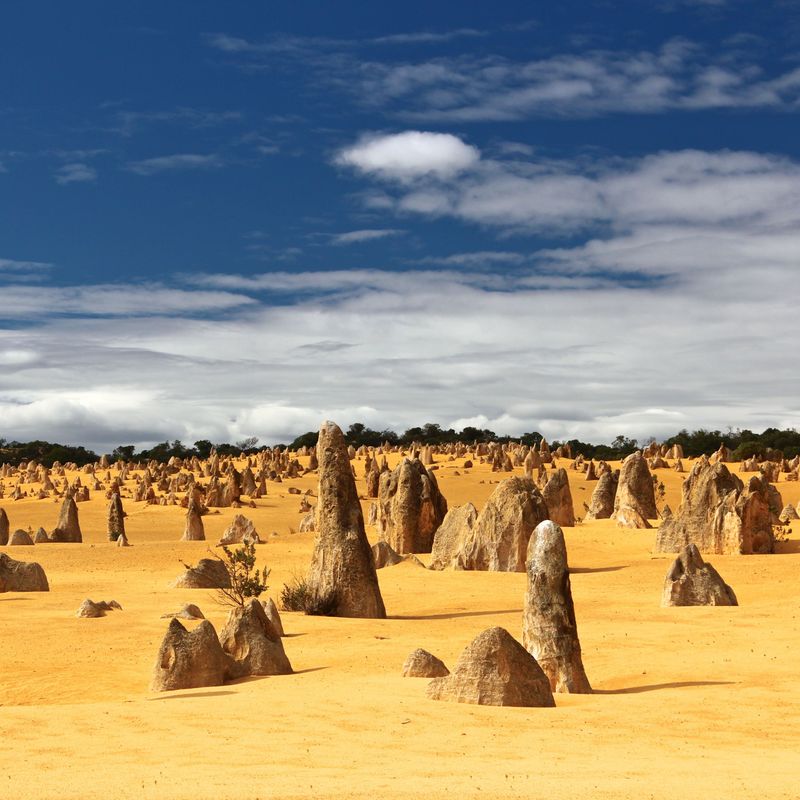
Feast on freshly caught lobster in Cervantes, a small fishing town located around 123 miles north of Perth. Known as the gateway to Western Australia’s Pinnacle Desert, it is a memorable stop along the Coral Coast.
The Pinnacles are one of Australia’s striking natural wonders. Located in the heart of Nambung National Park, this otherworldly landscape is filled with thousands of limestone spires.
Strange, weird, and wonderful!
The bizarre pillars have an otherworldly quality, creating a moonscape-like landscape that feels almost as though it belongs on another planet. Some of the formations reach an impressive 39 feet in height.
There is no shortage of nature here
Visit Lake Thetis, home to some of the world’s oldest ‘living’ fossils, including thrombolites and stromatolites. Go swimming at Hangover Bay, or try fishing at Thirsty Point Lookout.
You can also stop by Kangaroo Point, where kangaroos often gather on the beach at sunset.
Kalbarri
Kalbarri is where the rugged red outback meets white-sand beaches. Set at the mouth of the Murchison River, it offers plenty of ways to enjoy the outdoors, whether along the coast or on the river. With a pleasant climate year-round, the region is known for its seaside cliffs, estuary beaches and wild pelicans.
In Kalbarri National Park, you will find a 50-mile gorge carved by the Murchison River. Wander through the park to discover scenic viewpoints, striking rock formations and a wide variety of colourful wildflowers, which bloom from July to October.

Let's design your holiday together
We take the time to get to know you, shaping a fully bespoke holiday around your pace, interests and travel style. With first-hand local knowledge, we create a carefully mapped-out itinerary for you, refining every detail until you are completely happy.
We take care of the planning, so you can focus on relaxing, reconnecting and enjoying the world around you. Get in touch to start planning your tailor-made holiday.