Australia’s most unique animals
Australia is bursting with extraordinary wildlife, from iconic kangaroos and koalas to rare birds, reptiles and marine life found nowhere else on Earth. Discover our list of Australia's unique animals and what makes them so special.

Australia is a natural wonderland, home to around one million native species. From mammals, frogs and reptiles to flowering plants, 80% are found nowhere else on Earth.
There are 379 species of mammals, including kangaroos, koalas, echidnas, wallabies, wombats, platypuses and dingoes, so there’s plenty of weird and wonderful wildlife to discover.
Keen birdwatcher? Australia has approximately 828 bird species, around half of which are unique to the country. Prefer reptiles? With about 300 species of lizard, 140 species of snake and two species of crocodile, Australia is a reptile paradise.
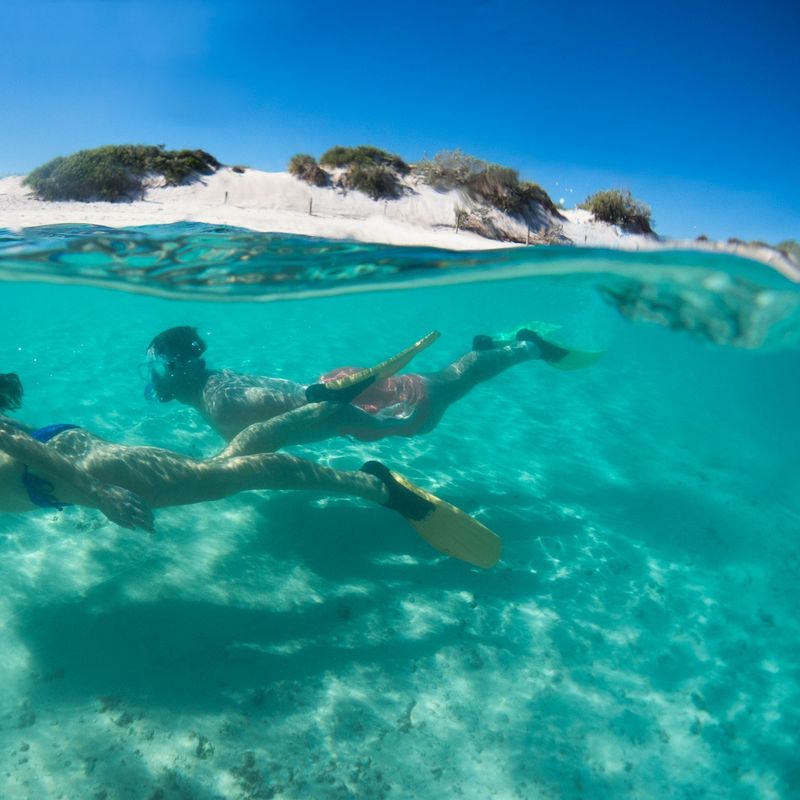
Its marine life is just as remarkable, with more than 4,000 species of fish, 1,700 species of coral and 50 species of marine mammal. Many species found in Australia’s southern waters can’t be seen anywhere else in the world.

Australia's most unique animals
Southern cassowary
In Tropical North Queensland, the elusive cassowary is one of the rainforest’s most remarkable sights. This large, colourful bird has an almost prehistoric appearance, with a striking helmet-like casque on its head and a vivid blue neck.
Standing up to around 5 feet 11 inches tall and weighing approximately 9 stone, the cassowary is as impressive as it is distinctive. Shy by nature, it is most often glimpsed quietly moving through the dense rainforest.
You may be fortunate enough to spot one near some of our accommodation in Port Douglas or Mission Beach, or during a guided rainforest walk.

Tasmanian Devil
Found only in Tasmania, the Tasmanian devil is one of Australia’s most distinctive and endangered native species. Recognisable by its black fur with white markings, broad head and powerful build, this remarkable marsupial measures around 2 feet 4 inches to 3 feet 7 inches in length.
In the wild, Tasmanian devils are usually found in forests, woodlands and rocky areas, where they are most active after dark. You can learn more about them in Tasmania’s wildlife parks and conservation centres, including those near Cradle Mountain-Lake St Clair National Park, part of the Tasmanian Wilderness World Heritage Area.
Sadly, the species has been severely affected by Devil Facial Tumour Disease since the 1990s, making conservation efforts vital to its future.

Red-tailed black cockatoo
In Victoria, the call of the red-tailed black cockatoo can sometimes be heard echoing through the trees. With its dark plumage and vivid red tail feathers, this endangered Australian bird is a striking sight.
Only around 1,000 are thought to remain in the region. They are most often found in eucalyptus forests and along streams, including areas near the Great Ocean Road and the Mornington Peninsula.
Red-tailed black cockatoos rely on a specific diet of seeds. As agriculture has expanded, their food sources and nesting sites have become more limited, making it harder for the species to breed and survive.

Australian frilled lizard
With its fan-like frill and dragon-like appearance, the Australian frilled lizard is one of the country’s most distinctive reptiles. Despite its dramatic looks, it poses no threat to humans.
Also known as the frill-necked lizard, or affectionately as the “frilly”, it can grow to around 2 feet 4 inches to 3 feet in length. When startled, it raises the large frill around its neck, creating an impressive display.
Frilled lizards are most commonly found in northern Australia, including Kakadu National Park, where they live mainly in trees across woodland and coastal regions.

Wombat
The wombat is a sturdy marsupial with a look somewhere between a badger and a small bear. It is easily recognised by its grey-brown coat, short tail and bare nose.
Wombats grow to around 2 feet 4 inches to 3 feet 11 inches in length and are mostly found in dry forests. Their pouch opens backwards, which helps protect their young from soil and sand while the wombat is digging.
You can find wombats in south-eastern Australia and Tasmania, although they can be difficult to spot in the wild as they spend much of the day in burrows. For the best chance of seeing one, visit the Blue Mountains National Park or Kosciuszko National Park in New South Wales, or Wilsons Promontory National Park in Victoria.

Dingo
Dingoes may look a little like domestic dogs, but they are wild animals and should never be approached.
The dingo is thought to descend from the Indian wolf and was likely brought to Australia by humans around 5,000 years ago. Today, dingoes live and hunt in the wild, feeding on animals such as rabbits, rodents and birds.
They are usually recognised by their sandy-coloured coat, white markings and bushy tail. Dingoes can be seen in places such as K’gari, formerly Fraser Island, the Kimberley region, and the deserts of northern and southern Australia.

Grey-headed flying fox
The grey-headed flying fox is Australia’s largest bat, with a wingspan of around 3 feet 3 inches. It has a dark grey body, a pale grey head and a brownish collar around its neck, giving it an almost dog-like appearance. This is why flying foxes are sometimes known as “flying dogs”.
They are found in forested areas of south-eastern Australia, particularly east of the Great Dividing Range, and are most often seen at sunset as they leave their roosts to feed.
The grey-headed flying fox is a threatened species, largely due to habitat loss linked to agriculture and urban development. Colonies remain vulnerable, and the species continues to face pressure where it comes into conflict with farming.

Kangaroo
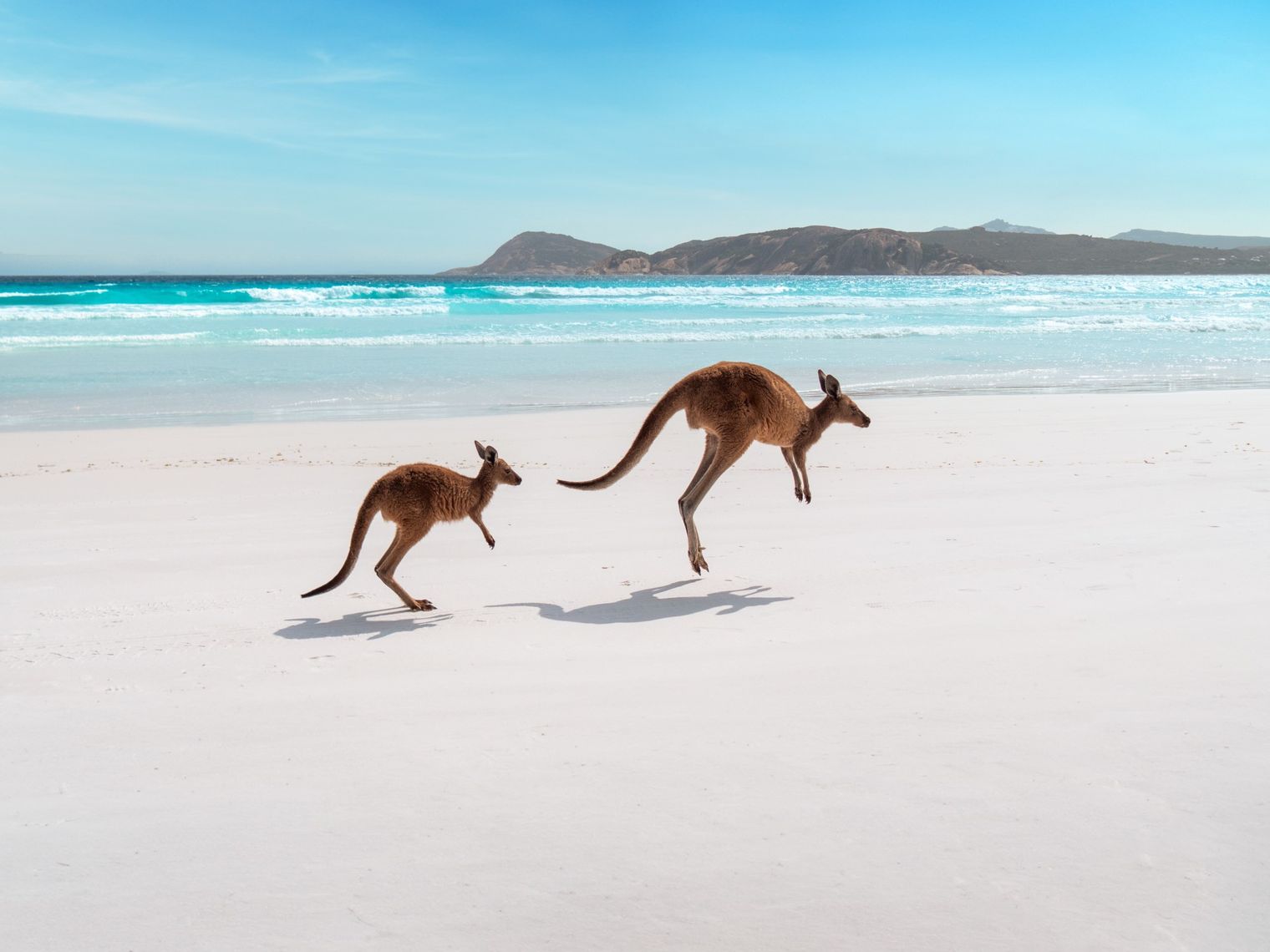
Few animals capture the spirit of Australia quite like the kangaroo. This iconic marsupial has become one of the country’s most recognisable symbols and is a true highlight for many travellers.
Australia is home to an estimated 30 to 40 million kangaroos, with more than 55 different species. They are most often seen in rural and open landscapes, so there is a good chance of spotting one during your journey.
For some of the best sightings, visit the Flinders Ranges, Kangaroo Island, Pebbly Beach in New South Wales or Maria Island in Tasmania. In Halls Gap, at the heart of the Grampians, kangaroos often gather in the late afternoon, sometimes passing right by your porch.
Platypus
The platypus is one of Australia’s most unusual native animals. This protected species is a monotreme, one of the world’s only egg-laying mammals.
With the body of a mole, the tail of a beaver and the bill of a duck, the platypus has a wonderfully distinctive appearance. It grows to around 2 feet in length and usually weighs between 2 and 4 pounds. Although it may look gentle, males have a venomous spur on their hind legs. This is not usually dangerous to humans, but it can be extremely painful.
Platypuses are shy and can be difficult to spot in the wild. You may have the chance to see one at one of our accommodations in the Atherton Tablelands, where you’ll be given a map showing where they are known to live.

Koala
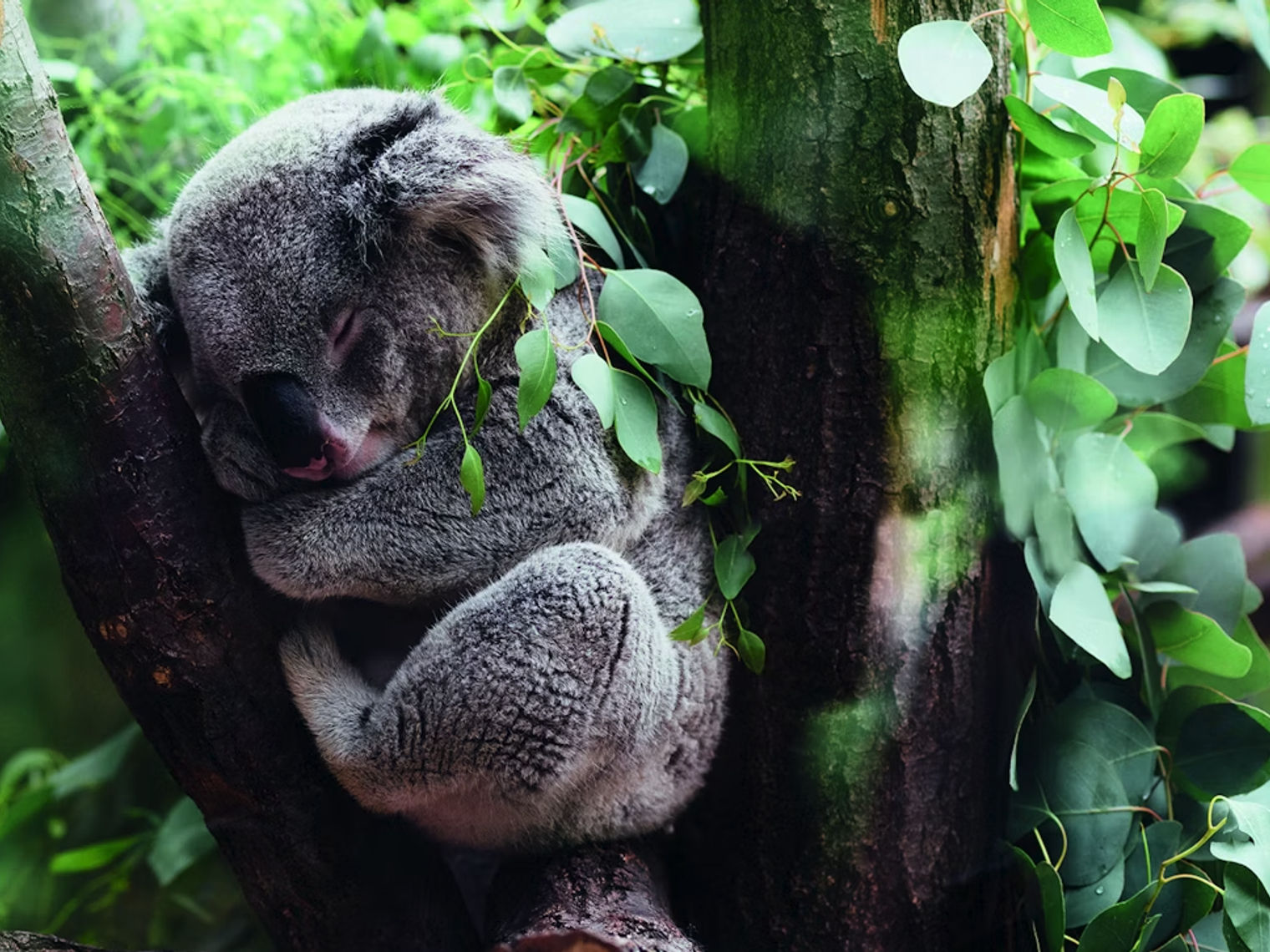
Last but certainly not least: the koala. With its fluffy ears, rounded body and bear-like appearance, it is one of Australia’s most recognisable animals. Despite its cuddly looks, a koala is still a wild animal and should not be approached.
Koalas are most often seen resting high in eucalyptus trees, where they spend much of the day sleeping. Spotting one awake is less common, but seeing a koala in the wild is still a memorable experience.
For the best chance of seeing koalas, visit Great Otway National Park, Magnetic Island, the Mornington Peninsula or Port Macquarie, where you’ll also find a dedicated koala hospital.
Australia’s wildlife is full of unforgettable moments, from kangaroos at sunset to koalas in the eucalyptus trees. Speak to our Australia specialists to plan a journey with the best chances of seeing them in the wild.
Frequently asked questions
Animals only found in Australia include the platypus, dingo, koala, Tasmanian devil and many species of kangaroo and wallaby. Some, such as the Tasmanian devil, only live in particular regions, so where you travel makes a big difference. Our travel specialists can advise you on the best places to travel to see Australia's unique wildlife.
Some of the best places to see wildlife in Australia are Kangaroo Island, Tasmania, the Atherton Tablelands, Tropical North Queensland, the Blue Mountains and Victoria’s national parks. Blending guided nature experiences with slower-paced rural stays gives you the best chance of spotting wildlife in their natural habitats.
Yes, you can see kangaroos and koalas in the wild in Australia, although sightings are never guaranteed. Kangaroos are often seen in open countryside, national parks and even near beaches, while koalas are usually found high in eucalyptus trees along parts of the east and south coasts. Adding locally guided nature tours and rural, slow-paced stays to your trip gives you the best chance of spotting these iconic animals in the wild.